


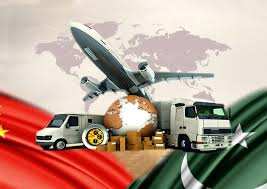
In the competitive landscape of international trade, many importers make the mistake of viewing logistics as a simple “port-to-port” transaction. However, the reality of the China-Pakistan trade corridor is far more complex. A shipment successfully arriving at the Port of Karachi is only halfway home. To truly succeed, businesses need a strategy that encompasses every touchpoint, from the factory floor in Guangdong to the retail shelf in Lahore.
This is where End-to-End Freight Forwarding China to Pakistan becomes a critical competitive advantage. It moves beyond simple shipping to provide a Full Supply Chain Management China to Pakistan solution. By integrating sourcing, warehousing, customs, and final delivery, you eliminate the friction points that cause delays and inflate costs. If you are ready to stop managing multiple vendors and start scaling your business, it is time to embrace complete end-to-end import support.
The Sourcing and Shipping Synergy
Starting Strong with Integrated Solutions
The journey of a successful import begins long before the goods reach a container. China Sourcing and Shipping to Pakistan are two sides of the same coin. When these services are disconnected, communication gaps lead to incorrect orders or missed shipping deadlines. An end-to-end provider bridges this gap by coordinating directly with suppliers to ensure production timelines align with vessel schedules.
A Total Logistics Service China to Karachi starts with verifying the goods at the source. This ensures that the quantity and quality promised by the factory are exactly what is loaded. This synergy is essential for a Streamlined Import Process China to Pakistan, where information flows as fast as the physical goods.
By integrating these phases, you gain better control over the “first mile.” This level of coordination is only possible when your logistics partner is also your sourcing eyes on the ground. You can learn more about how to secure your supply chain through professional reliable supplier scouting and sourcing services.
The Strategic Value of Combined Warehousing
Optimizing the Middle Mile
The most overlooked aspect of Integrated Logistics China Pakistan is the role of the domestic Chinese warehouse. Instead of shipping directly from multiple factories—which leads to high costs and fragmented tracking—smart importers use Combined Warehousing and Freight Solutions.
A centralized warehouse allows for:
- Consolidation: Grouping LCL shipments into a single FCL to reduce costs.
- Compliance Checks: Verifying documentation before the goods reach the port.
- Buffer Stocking: Holding goods in China to time the shipping market for better rates.
This “Middle Mile” optimization is what transforms a standard shipment into a Complete Import Solution for Pakistan. Without this hub, you lose the ability to perform Freight Risk Mitigation for Pakistan Importers, as you have no way to intervene if a supplier sends the wrong items. To gain this control, you need a partner with a secure storage and distribution hub strategically located near China’s major manufacturing zones.
Navigating Borders and Multimodal Paths
Complexity Simplified: Customs and Multimodal Logistics
The border is where most “port-to-port” shipments fail. Customs Clearance and Inland Trucking Pakistan require a deep understanding of local regulations, HS codes, and duty structures. An end-to-end service manages both the Chinese export declaration and the Pakistani import clearance, ensuring data consistency that prevents expensive “red channel” delays.
Furthermore, the path to your warehouse often involves Multimodal China Pakistan Logistics. Your cargo might travel by sea to Karachi, then by rail to an inland dry port, and finally by truck to your doorstep. Coordinating these different modes of transport requires a provider who manages the entire “Bill of Lading” from start to finish.
Managing this paperwork is a specialized skill. Every shipment requires accurate customs paperwork to ensure that “How to manage full supply chain from China to Pakistan?” doesn’t become a question of legal penalties, but a story of operational success.
The Last Mile and Real-Time Visibility
Delivering the Promise: Port-to-Door Excellence
The true test of End-to-End Freight Forwarding China to Pakistan is the final leg. Port-to-Door Delivery China Pakistan is not complete until the goods are safely inside your facility. This requires a robust network for Last Mile Delivery Karachi Lahore Islamabad, ensuring that the specialized needs of your cargo are met even on the final trucking route.
During this final phase, the Benefits of integrated logistics for China trade become clear. You have one point of contact, one invoice, and a single tracking number. You no longer need to wonder where your cargo is or who is responsible for the next step. This transparency is the core of all-inclusive DDP shipping, where even the final mile costs are handled upfront.
Protecting the Bottom Line
Risk Management and Dedicated Support
In a supply chain that spans thousands of miles, things can go wrong. Ships get delayed, and customs regulations change. An end-to-end approach allows for better Freight Risk Mitigation for Pakistan Importers because the provider has visibility into every stage. They can reroute cargo, update documents, and resolve issues before they become expensive problems.
This proactive management is only possible through dedicated, local-language support. A partner that prioritizes improving buyer communication ensures that you are never left in the dark. Whether it’s a question about reliable FCL transport or a warehouse update, you receive instant, accurate answers.
Conclusion: The Future of Your Import Business
The era of fragmented logistics is ending. To remain competitive in the China-Pakistan corridor, businesses must move “Beyond the Port.” By embracing End-to-End Freight Forwarding China to Pakistan, you replace chaos with a streamlined, predictable, and highly profitable supply chain.
Stop managing logistics and start growing your business with a partner who handles the entire journey.
Ready to simplify your entire import process? Contact us today to discuss your end-to-end logistics strategy.